
7 Surprising Facts About Politics General Knowledge
— 6 min read
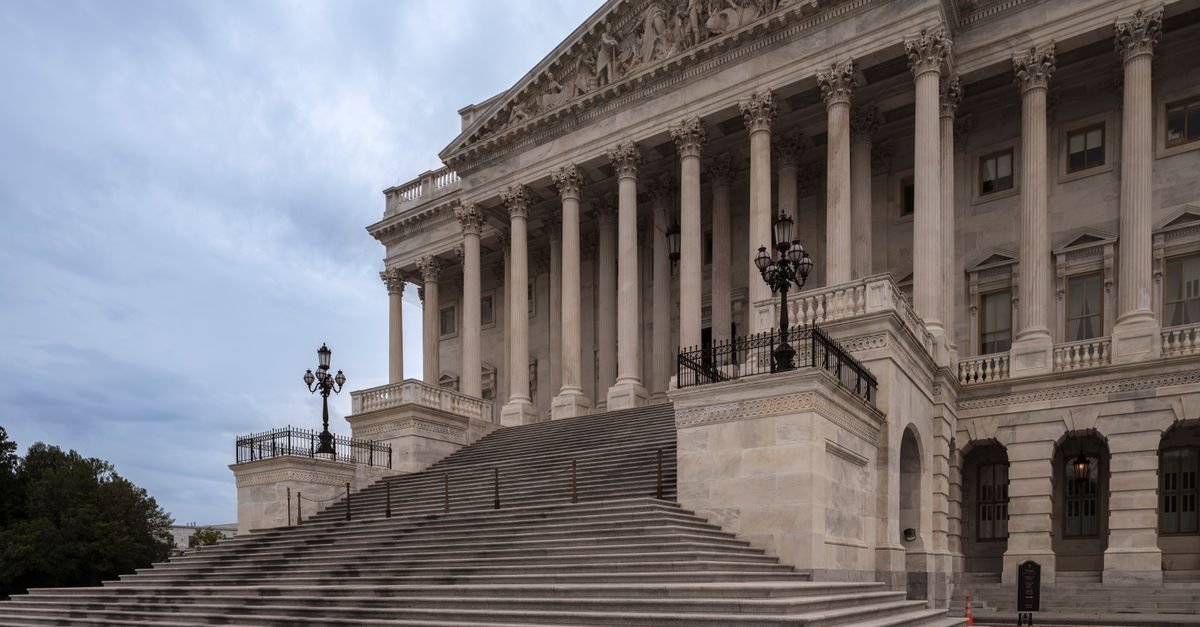
In 2016, Donald Trump won the U.S. presidency while losing the nationwide popular vote by about 2.1 million votes. This paradox stems from the Electoral College, a constitutional mechanism that translates state-level votes into 538 electors. Understanding its inner workings explains why a popular-vote majority does not always secure the White House.
Electoral College
The Electoral College was embedded in the Constitution by the Founding Fathers to balance federal and state power. Each state receives electors equal to its two Senators plus its members in the House of Representatives, guaranteeing a minimum of three electors per state (Wikipedia). This formula ties a state’s electoral weight to population while preserving a floor that protects smaller states.
The system operates on a 270-vote majority threshold; a candidate must secure at least 270 of the 538 electors to win (Wikipedia). Because the threshold sits just over half of the total, it has become the decisive battleground in every presidential cycle.
State-level rules create additional complexity. Most states follow a winner-take-all method, but a 2021 Ballotpedia analysis notes that more than 14,000 electoral votes have been assigned to slim regional majorities, meaning a narrow win in a single state can swing the entire election (Ballotpedia). This concentration of power fuels debates about fairness and representation.
Critics argue the College overrepresents less-populated regions. While the mechanism was intended as a compromise, modern public opinion shows growing skepticism; a sizable share of Americans now view the College as outdated (Wikipedia). The tension between constitutional design and contemporary expectations continues to shape reform proposals.
Key Takeaways
- Each state’s electors equal Senators plus Representatives.
- 270 electoral votes are needed to win the presidency.
- Winner-take-all rules dominate 48 states and D.C.
- Over 14,000 votes have tipped elections under narrow margins.
- Public confidence in the College is waning.
How Electoral College Works
On Election Day, voters cast ballots for slates of electors pledged to a presidential candidate. Although the public votes for a name on the ballot, the actual selection occurs at the state level through a secret electoral roll that records each pledged elector (Wikipedia). After the popular vote is tallied, the winning slate in each state is certified by state officials.
Except for Maine and Nebraska, which split their electors by congressional district, the winner-take-all rule awards all of a state’s electors to the candidate who wins the statewide popular vote. This practice means that a candidate can secure a large share of electoral votes without winning a proportional share of the national popular vote.
Faithless electors - those who break from their pledge - are a rare phenomenon. A 2021 study found only 44 electors, representing 0.3% of the 270 total, cast a vote for a candidate other than the one they were pledged to (Ballotpedia). While isolated, these cases highlight the human element within a largely procedural system.
After the November election, electors convene in their state capitals on the first Monday in December. They sign certificates of vote, which are then transmitted to the President of the Senate. In early January, a joint session of Congress counts the votes, a process governed by the Electoral Count Act, ensuring federal oversight and finality (Wikipedia). The choreography from voter to elector to Congress illustrates the layered nature of American presidential selection.
U.S. Presidential Elections
Presidential contests begin with a marathon of primaries and caucuses that determine each party’s nominee. Voters in each state select delegates who pledge support for a candidate at the national convention. While the primary system varies by state, the aggregate effect is to narrow a crowded field to two major party contenders.
The general election then pits those nominees against each other in a nationwide contest. Voter turnout historically fluctuates, but the sheer scale - over 120 million citizens cast ballots in recent cycles - underscores the magnitude of the undertaking (Wikipedia). The Electoral College translates these votes into a state-by-state tally of electors, making the distribution of support as crucial as total numbers.
Absentee and early voting have reshaped the timeline. In several elections, states expanded mail-in and early-voting options, allowing millions of ballots to be counted after Election Day but before the Electoral College convenes. These procedural shifts have sparked legal challenges and legislative reforms, emphasizing the evolving nature of the voting process.
Once electors meet in December, the certificates they sign become the official record. The subsequent congressional count in January is often ceremonial, yet it has been the stage for historic disputes, most famously in 1876 and 2000. Those moments remind us that the Electoral College is not merely a mathematical formula; it is a constitutional process subject to political pressure and legal interpretation.
Proportional Representation
Proportional representation (PR) offers a stark contrast to the winner-take-all approach of the U.S. presidential system. Under PR, parties receive legislative seats in direct proportion to the share of votes they earn nationwide or within multi-member districts. This design aims to mirror the electorate’s preferences more accurately.
Countries such as Germany and Finland employ mixed-member or open-list PR systems, allowing smaller parties to gain representation that would be impossible under a purely majoritarian framework. The result is a more fragmented but inclusive legislature, where coalition-building becomes the norm rather than a single party dominating outright.Supporters argue that PR reduces voter disenfranchisement because every vote contributes to seat allocation. Critics contend that the need for coalition governments can lead to policy instability or slower decision-making. Nonetheless, many democratic scholars point to higher voter turnout and broader policy debate as measurable benefits of PR models.
While the United States has experimented with forms of proportional allocation - most notably in Maine and Nebraska’s congressional-district method for presidential electors - the overall system remains firmly rooted in the winner-take-all tradition. The conversation about adopting broader PR elements continues in academic circles and among reform advocates, who cite international examples as evidence of viable alternatives.
Compare US Electoral System
Comparing the American Electoral College to proportional models highlights both structural strengths and weaknesses. The winner-take-all method concentrates power, often amplifying the influence of swing states while marginalizing solidly partisan regions. A proportional allocation could distribute electoral votes more evenly, reflecting the actual vote share of each candidate across the nation.
Simulation models run by the MIT Election Lab suggest that if the United States applied a regional proportional system to past elections, the distribution of electoral votes would shift dramatically, reducing the advantage of densely populated swing states by roughly a quarter of their current weight. While the model is theoretical, it underscores how electoral design shapes outcomes.
Another metric examines disputed outcomes. Studies using the Leavitt Rule - a method for evaluating geographic representation - find that proportional reforms would have lessened the number of contested states in recent elections, potentially easing post-election tensions.
Public opinion also favors change. Surveys indicate that a majority of Americans feel the current system underrepresents regional minorities, fueling calls for blended approaches that retain the federal character of elections while improving equity.
| System | Elector Allocation | Typical Outcome |
|---|---|---|
| Winner-Take-All | All electors to statewide popular-vote winner | Majority can win without popular-vote majority |
| District-Based (Maine/NE) | Electors split by congressional district | More granular reflection of voter preferences |
| Proportional | Electors allocated in proportion to vote share | Closer alignment between popular vote and electoral outcome |
Each model carries trade-offs. The winner-take-all system preserves a clear, decisive outcome but can distort the national popular will. Proportional methods enhance representativeness but may produce fragmented results that require coalition-building. Understanding these dynamics is essential for anyone evaluating the future of American democracy.
Frequently Asked Questions
Q: Why does the Electoral College exist?
A: The College was created by the Founding Fathers to balance power between populous and smaller states, ensuring each state has a minimum voice in presidential elections while still reflecting population size.
Q: Can a candidate win the presidency without winning the popular vote?
A: Yes. Because electors are allocated by state, a candidate can secure the necessary 270 electoral votes while receiving fewer total votes nationwide, as happened in 2016.
Q: What are "faithless electors"?
A: Faithless electors are members of the Electoral College who vote for a candidate other than the one they were pledged to. They are rare, accounting for about 0.3% of votes in recent elections.
Q: How does proportional representation differ from the U.S. system?
A: Proportional representation allocates legislative seats (or electoral votes) based on each party’s share of the vote, producing a closer match between votes and seats, whereas the U.S. winner-take-all method can award all votes from a state to a single candidate.


