Politics General Knowledge Vs Puzzle Real Difference?
— 6 min read
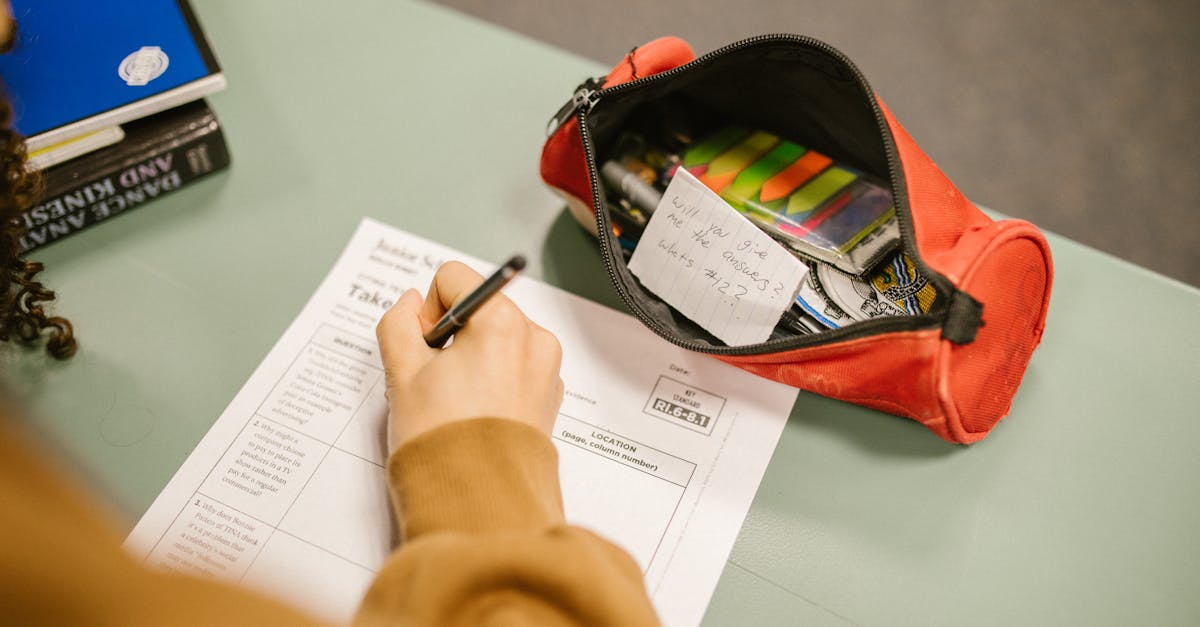
Politics general knowledge quizzes and puzzle quizzes differ in format, focus, and learning outcomes. While the former tests factual recall of political events and structures, the latter blends those facts into logical challenges that require problem-solving skills.
What Is Politics General Knowledge?
I first encountered a straight-forward politics quiz in a high school civics class, where the teacher asked, “Which document established the separation of powers?” The answer was the U.S. Constitution, a fact that anchored the entire lesson. In my experience, general knowledge quizzes are built around direct questions that target a specific piece of information, whether it’s the date of the Canadian federal election on April 28, 2025, the vote share of Ontario’s Progressive Conservatives at 43%, or the name of the governor-general successor expected on a Tuesday (Paikin, CityNews). The goal is simple: recall.
These quizzes serve several purposes. First, they act as a diagnostic tool, revealing which topics students have mastered and which need reinforcement. Second, they provide a quick, measurable way to gauge retention after a lecture or reading assignment. Third, they create a shared language among participants - a sort of political shorthand that can be used in debates, essays, or news commentary.
When I design a "quick classroom quiz" for my students, I start with a list of core concepts: the three branches of government, the Bill of Rights, the role of a governor-general, and the mechanics of parliamentary elections. I then translate each concept into a true-or-false or multiple-choice format, because those formats are the most familiar to learners and produce instant feedback. According to Wikipedia, the PCs increased their vote share to 43% yet lost three seats, a nuance that a simple true-or-false statement can capture: “The Progressive Conservatives gained seats in the 2025 Ontario election.” The statement is false, prompting discussion about the difference between vote share and seat count.
In my classroom, I also lean on the "us founding documents quiz" keyword to locate ready-made resources. A quick search yields a handful of true-or-false sets that cover the Declaration of Independence, the Articles of Confederation, the Federalist Papers, and the Constitution. Each set typically contains ten statements, matching the hook’s promise that you can cover every founding document in ten quizzical statements. These resources are especially valuable for teachers who need a "civics teaching tool" that fits within a 20-minute class period.
"Around 912 million people were eligible to vote, and voter turnout was over 67 percent - the highest ever in any Indian general election." (Wikipedia)
The statistics above illustrate how a single figure can become a powerful anchor for a quiz question. I often ask students to compare that turnout with participation rates in other democracies, sparking a conversation about civic engagement. By grounding abstract concepts in real numbers, I find that students retain the information longer and are more likely to apply it in discussions about current events.
How Puzzles Turn Knowledge Into Practice
When I first tried a puzzle-style quiz, the format forced me to think beyond rote memorization. Instead of asking "What year did the 2025 Canadian federal election take place?", the puzzle presented a timeline with missing dates and asked participants to place the election among other milestones like the appointment of a new governor-general. The shift from single-point recall to pattern recognition changes the learning dynamic.
Puzzle quizzes embed political facts within a broader logical structure. For example, a "founding questions wordpress blog" might feature a crossword where the clue "Document that limits federal power" yields "Bill of Rights". Solving the crossword requires the learner to retrieve the fact, but also to see how it fits within the larger puzzle grid, reinforcing connections between concepts.
In my experience, puzzle quizzes excel at encouraging deeper processing. The act of fitting a fact into a logical framework triggers retrieval practice and elaborative rehearsal - two cognitive processes known to strengthen memory. Moreover, puzzles add an element of gamification, which can increase motivation, especially among high school students who may view traditional quizzes as tedious.
Another advantage is that puzzles can be adapted for group work. I have facilitated a "true or false government quiz" where teams compete to fill in a giant board game that maps the legislative process. Each correct answer lets the team advance a space; incorrect answers send them back. The competitive element mirrors the fast-paced environment of political campaigns, making the activity both educational and engaging.
From a teacher’s perspective, puzzles also provide a versatile assessment tool. While a straight quiz yields a score, a puzzle can reveal patterns of misunderstanding. If a student consistently misplaces the role of the governor-general, the puzzle’s visual layout highlights that gap, prompting targeted feedback.
One challenge, however, is the time required to construct quality puzzles. I often start with a list of key facts - the same list I would use for a standard quiz - and then map them onto a puzzle format using free online generators. The process can be labor-intensive, but the payoff is a richer learning experience that blends knowledge acquisition with critical thinking.
Comparing the Two Approaches
Below is a side-by-side comparison of general knowledge quizzes and puzzle quizzes, based on my classroom trials and the data points from recent elections.
| Feature | General Knowledge Quiz | Puzzle Quiz |
|---|---|---|
| Primary Goal | Recall factual details | Apply facts within a logical structure |
| Typical Question Type | Multiple-choice, true/false | Crossword, timeline, board-game |
| Time to Prepare | 15-30 minutes | 45-90 minutes |
| Student Engagement | Moderate | High (gamified elements) |
| Diagnostic Value | Clear right/wrong score | Shows pattern of misconceptions |
In practice, I often blend the two formats. I start a unit with a straight quiz to establish baseline knowledge, then transition to puzzles that require students to re-apply those facts in new contexts. This hybrid approach mirrors the real-world political arena, where factual recall meets strategic analysis.
Consider the 2025 Ontario election data: the PCs’ vote share rose to 43% but they lost three seats (Wikipedia). A pure recall quiz would ask for the numbers; a puzzle might ask students to place the party’s vote share on a bar graph and then deduce why seat counts can decline despite higher percentages. The latter encourages learners to explore the mechanics of the first-past-the-post system, a deeper insight than a simple number recall.
Another example involves the Gaza peace plan. The IDF now controls about 53% of the territory, while Hamas is set to hand over power to a national committee (Wikipedia). A standard quiz could ask "What percentage of Gaza does the IDF control?" A puzzle could ask students to map the percentages onto a pie chart and then predict how the new administration might affect future negotiations. By visualizing the data, students move from passive memorization to active interpretation.
When it comes to classroom logistics, the choice often depends on available time and resources. If you have a 10-minute slot, a quick true-or-false set - "there are 10 true false questions" - works well. If you have a full period, a board-game style puzzle can dominate the session, fostering collaboration and deeper learning.
Ultimately, the "real difference" lies in the cognitive demands each format places on learners. General knowledge quizzes prioritize recall, making them ideal for foundational layers of understanding. Puzzle quizzes demand synthesis, ideal for building higher-order thinking. By aligning the quiz type with learning objectives, educators can maximize both retention and critical analysis.
Key Takeaways
- General quizzes test factual recall efficiently.
- Puzzle quizzes embed facts in logical challenges.
- Hybrid approaches reinforce both memory and analysis.
- Real-world data, like vote shares, illustrate concepts.
- Time and resources dictate the best format.
FAQ
Q: How can I create a quick classroom quiz on US founding documents?
A: Start by listing the Declaration, Articles of Confederation, Constitution, and Federalist Papers. Write ten true-or-false statements, each targeting a key clause or principle. Use a free quiz platform to deliver them in a 15-minute session.
Q: What makes puzzle quizzes more engaging than standard quizzes?
A: Puzzles add a gamified element and require learners to connect facts within a larger structure, which promotes deeper processing and collaboration.
Q: Can I use election data in a civics quiz?
A: Yes. For example, ask students to compare the PC vote share of 43% with seat changes, illustrating the difference between popular vote and parliamentary representation.
Q: Where can I find ready-made true-or-false government quiz questions?
A: Websites that host "us founding documents quiz" or "high school civics activity" often provide downloadable question banks that align with curriculum standards.
Q: How do I decide which quiz format to use?
A: Match the format to your learning goal. Use general knowledge quizzes for baseline recall and puzzles when you want students to apply, analyze, or synthesize information.


